
Blown-in insulation in Soledad CA - an attic covered evenly from edge to edge
Hot upstairs, drafty rooms or a power bill that keeps climbing? We fix what's wrong in the attic, then blow in an even layer.
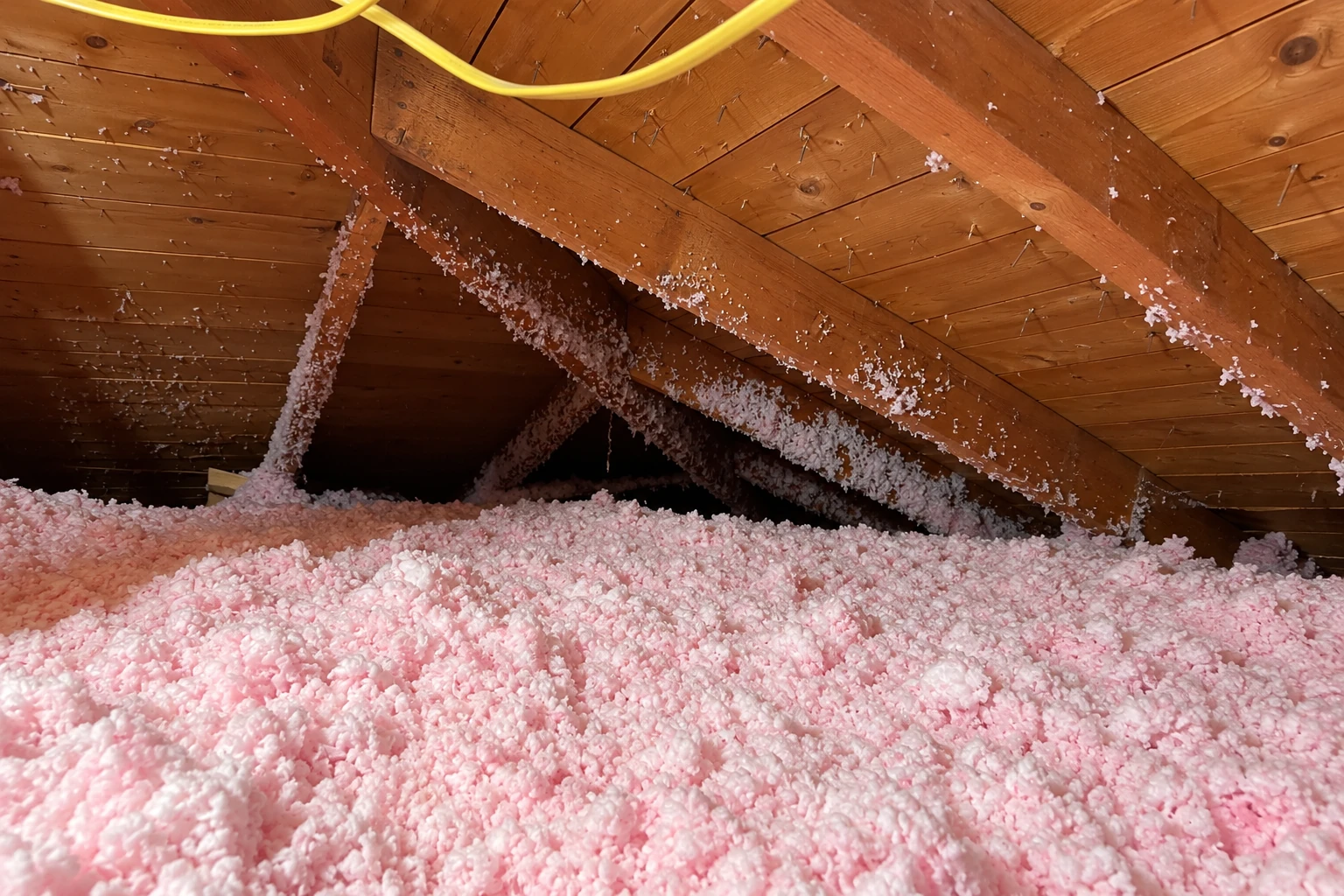
Attic checked first
Leaks, wiring and damp old fill get sorted before anything new.
Gaps sealed
We close gaps around lights, pipes and the attic hatch.
Baffles at the eaves
They hold the fill back so the eave vents stay clear.
Loose fill blown in
Fill goes across the whole ceiling, not just the middle.
What does blown-in insulation do for a Soledad attic?
Blown-in insulation in Soledad, CA is loose fill we blow through a hose across your attic floor, covering the whole ceiling so the upstairs holds its temperature better in summer and winter.
I start with the order. Anything wrong in the attic gets fixed first, because fresh insulation over a leak or a bad wire just hides it. Then we close the gaps around pipes, lights and the hatch, set baffles, little chutes that keep fill out of the eave vents, and blow the fill as evenly as we can across the whole ceiling.
The price mostly turns on the size of the attic, how much fill is already up there and how much sealing or fixing comes first. The schedule turns on those same fixes and on a permit, if your job needs one. My written estimate lists what I found and what I'd do first. If your walls or crawl space need work too, see home insulation.
- A cooler upstairs in summer
- Fewer drafts through the ceiling
- Even depth out to the edges
- A walk-through of the finished attic
How do you know your attic needs more insulation?
Most people call when a room stops feeling right, but the attic usually shows the reason first, so here's what to look for.
Upstairs runs hot
Bedrooms upstairs stay warm long after sunset because summer heat soaks through a thin attic and down through the ceiling.
Drafty in winter
Cold air finds its way in around ceiling lights and the attic hatch when the gaps up there were never sealed.
The room over the garage
It's often the hardest room in the house to keep comfortable, because its ceiling and floor both face unheated space.
Power bill keeps climbing
The heater and the air conditioner run longer than they used to, and the ceiling is usually where the heat gets through.
You can see the joists
If the tops of the ceiling joists show above the fill, the layer has thinned or settled and there's room to add more.
Old fill looks wrong
Dark, damp or flattened fill, or droppings in it, usually means the old layer comes out first through insulation removal.
Ask for a blown-in insulation estimate
Note your attic access, what's up there now and any can lights. We reply within one business day to set a free on-site estimate, no obligation.
What I look at before blowing in insulation
Before I recommend anything, I look over the attic, because what's already up there decides whether we can add fill on top or need to fix something first.
The fill already there
I measure how many inches are up there and check for dampness or droppings, since loose fill can go over dry, clean batts.
Leaks, framing and wiring
Leaks, rotted framing and pre-1930 knob and tube wiring come first, since that wiring can be a fire hazard under insulation and needs an electrician.
Old vermiculite
Vermiculite, a light, flaky, pea-size gray fill, may contain asbestos and stays put until an approved lab tests it. Your local health department can name one.
Can lights
We check whether your can lights are rated IC, for insulated ceiling, because other kinds need fill kept at least 3 inches away.
How a blown-in insulation job goes
We plan the work around your house, so before we start you know what we found, what gets fixed first and what the crew will do in the attic.
Call or send the form
Tell us about the attic and how you get into it, and we'll set a time for me to come out.
I look at the attic
I go up and check the fill, the wiring, the vents and the gaps, and I tell you what I see.
Your written estimate
You get a written estimate that lists anything that needs fixing first and what I'd do, so you see what you're paying for.
Permit and the work
If you go ahead, we line up any permit, then the crew seals the gaps, sets baffles and blows in the fill.
Walk-through together
I check the depth across the ceiling before the crew packs up, and we look at the finished attic with you.
Why Soledad homeowners call us for blown-in insulation
You'll know what's in your attic, what gets fixed first and why before we blow in anything. Backed by our satisfaction guarantee.
The owner writes your estimate
I come out, look at the attic and write the estimate myself, then check the crew's work before we finish.
In business since 2013
I learned insulation working on other crews, then started this business in 2013. That's 13 years of doing the work in the right order.
Covered before we climb up
We're fully licensed and insured. Ask about either when I'm out for the estimate, and I'll go over it with you.
You see what you pay for
Every line on your estimate says what it covers and why. Call (831) 315-4005 when you're ready for one.
Blown-in insulation in Soledad and nearby cities
Building permits in Soledad go through the city's building and planning office, which you can reach at 831-223-5041 or buildingpermits@cityofsoledad.com. Whether your blown-in job needs one isn't something I'll guess at. When it isn't clear, we check with the city before we start, and when a permit is needed, we handle the paperwork as part of the job.
California's energy code splits the state into sixteen climate zones and sets insulation standards by zone, so how much your attic should have depends on where the house sits. We're based in Soledad and do this work in Salinas, Greenfield, Gonzales, King City, Prunedale, Castroville and the cities around them, where we see plenty of older houses with thin, settled fill.
Got a hot upstairs or a thin attic? Give us a call.
(831) 315-4005Blown-in insulation questions we hear
How much does blown-in insulation cost per square foot?
Installing blown-in attic insulation usually costs about $4 to $7.50 per square foot across the US. Where your job lands depends on how much fill is already up there, how much sealing it needs and whether anything has to be fixed or removed first. Your written estimate spells that out for your attic.
Is blown-in insulation cheaper than batts for an attic?
Blown-in is usually cheaper than batts for an attic, and it covers better too. Loose fill settles in around joists, wires and odd corners where batts leave gaps, though installation costs still vary from one attic to the next.
Can blown-in insulation go over my old insulation?
Yes, loose fill can go right on top of old fiberglass batts or blankets, and it doesn't have to be the same type. That only works when the old layer is dry and clean, so wet or droppings-filled insulation comes out first, and any vermiculite stays put until it's tested.
How long does blown-in attic insulation take, and do we have to leave the house?
Blowing the fill is usually the quick part, and most of the time goes into sealing gaps, setting baffles and any fixes that come first. Loose fill has nothing to cure the way foam does, so you usually don't need to leave. I'll walk you through what your job involves when I write the estimate.
What is the best way to choose between blown-in and spray foam for an attic?
For most attics, sealing the gaps and topping up with blown-in is the better buy. Foam costs more, though it seals air while it insulates, which is why I lean toward it when the ductwork runs through the attic. I'll tell you which one fits once I've been up there.
Does an insulation contractor in Soledad need a California license?
Yes, California licenses insulation contractors under their own class, the C-2, which covers installing any insulation for heat or sound control. The only exception is minor work under $1,000 that needs no permit, done by someone with no employees on the job, so ask any installer for their license before they start.
Get a blown-in insulation estimate in Soledad
An early look buys time to line up any roof or wiring fix the attic needs first, so call (831) 315-4005 or send the form.